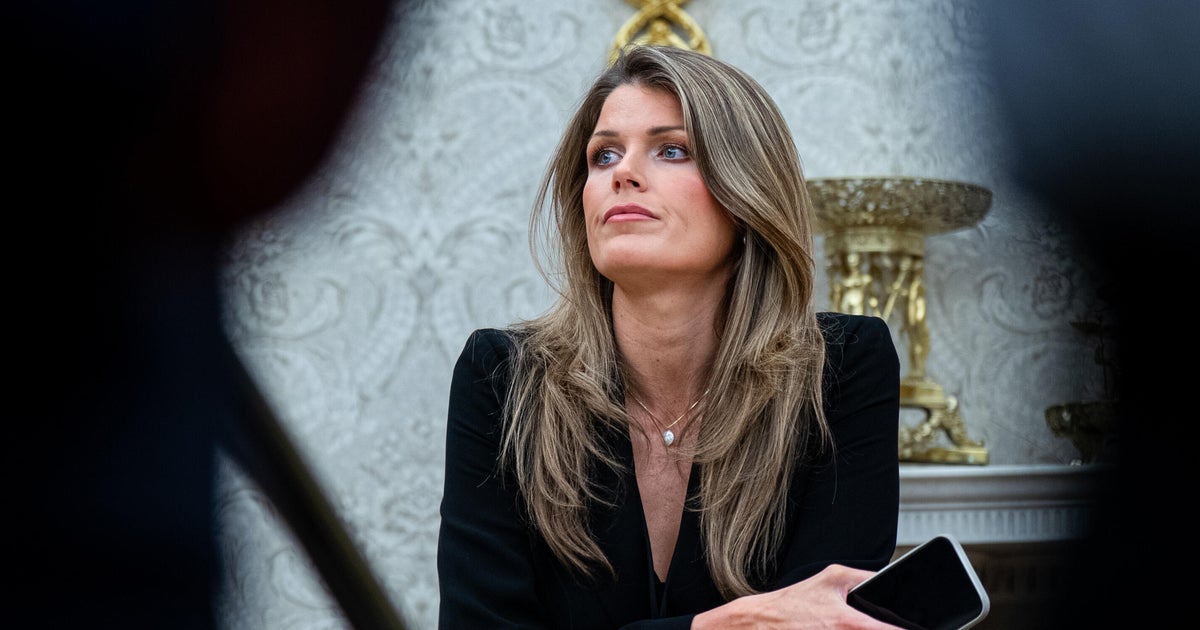
Lindsey Halligan under investigation by the Florida Bar
Lindsey Halligan under investigation by the Florida Bar
Lindsey Halligan under investigation by the Florida Bar
City of Chicago overcharged residents for city stickers, other parking violations for years: judge
A lawsuit claims the US Marshals Service is using local jails to hold detainees for immigration enforcement. by Abe Asher A group of immigrants rights organizations are suing Multnomah County, claiming the county and its sheriff’s office are violating Oregon’s sanctuary state law. The suit, filed in circuit court earlier this month, claims that Multnomah County is unlawfully agreeing to hold individuals detained by the U. S. Marshals Service for violations of federal immigration law even after they have posted bail or a judge has ordered their release. In one case, the organizations filing the suit allege, Multnomah County held a man for three days for immigration-related reasons after a judge ordered his release. “In order to comply with the Sanctuary Promise Act, our local officials should not be using their resources to aid ICE in doing their job,” Marirose Piciucco, a board member at the Portland Immigrant Rights Coalition, one of the plaintiffs in the suit, said. “Because that’s a federal job, and the feds have their own resources.” Oregon’s sanctuary state law, which was passed back to 1987, forbids local law enforcement agencies from using state resources for the purposes of immigration enforcement and from cooperating with federal law enforcement agencies in regards to immigration. In 2018, during Donald Trump’s first term as president, Oregon voters backed the sanctuary law-voting down a ballot measure that would have repealed the law by a margin of more than 25 percentage points. State lawmakers then strengthened the law in 2021. The status of sanctuary law was in the headlines again over the summer, when Attorney General Pam Bondi demanded that Oregon and other states and municipalities repeal their sanctuary laws-a demand Oregon Gov. Tina Kotek quickly rejected. But while Oregon’s voters and elected leaders remain committed to the sanctuary law, the lawsuit in Multnomah County and events elsewhere in the state are raising questions about whether local law enforcement agencies are fully in compliance with it. The lawsuit in Multnomah County hinges on the Multnomah County Sheriff’s Office intergovernmental agreement with the U. S. Marshals Service, a federal law enforcement agency located under the auspices of the Attorney General in the U. S. Department of Justice. The U. S. Marshals have historically been responsible for assisting the federal judiciary by apprehending federal criminal suspects, protecting courthouses, managing criminal assets, and more. This year, however, the Marshals’ role has been expanded: shortly after Trump was inaugurated in January, the Department of Homeland Security authorized the Marshals and a select number of other law enforcement bodies to perform the “functions of an immigration officer.” That authorization means U. S. Marshals can act as Immigration and Customs Enforcement (ICE) officers would-apprehending and detaining people for violations of immigration law even if they have not committed any crime. This is a germane issue in Oregon because a number of county jails in the state, including Multnomah County and Columbia County, contract with the U. S. Marshals for the use of their jail cells on a per diem basis-an arrangement that can help counties finance their jail systems. According to the lawsuit, Multnomah County entered into its agreement with the U. S. Marshals in 2019-agreeing to hold and maintain “Federal detainees,” including individuals “who are awaiting a hearing on their immigration status or deportation.” The suit notes that the Multnomah County Sheriff’s Office said in November that it will no longer incarcerate people for immigration violations, but claims that the county has held people for alleged immigration violations at multiple facilities this year and that its agreement with the U. S. Marshals remains legally unchanged. The plaintiffs want the Multnomah County Sheriff’s Office to modify its agreement with the U. S. Marshals to remove language about holding people detained for immigration purposes and ban the county from entering into similar agreements in the future. “In my view, unless the contracts have been amended to reflect that that practice will no longer happen, there’s always the possibility-if a new sheriff’s in town-that they go look at this contract and say, ‘Hey, we can do this,’” Piciucco said. A Multnomah County Sheriff’s Office spokesperson declined to comment on the lawsuit, but confirmed the existence of “an intergovernmental agreement with the U. S. Marshals Service to hold federal prisoners in the Multnomah County Jail.” The spokesperson said that the jail is generally not made aware of the reasons why people are booked and only records charges filed against people held there. The Columbia County Sheriff’s Office similarly denied that anyone incarcerated under the authority of the U. S. Marshals at the county jail is being held for immigration-related reasons, and said the charges those individuals are facing include illegal possession of firearms and intent to distribute fentanyl and methamphetamine. “They are not ICE holds,” Columbia County Sheriff Brian Pixley told the Mercury. “They’re not here for immigration purposes at all. We make sure there’s some sort of valid federal hold on them. They have to have a legal reason to be here.” Sheriff Pixley noted that holding someone on behalf of the Department of Homeland Security or ICE would violate state sanctuary laws. But the ongoing relationships between the U. S. Marshals and Oregon sheriff’s offices and county jails continue to draw scrutiny-in part because, across the country, ICE and local and state law enforcement agencies routinely coordinate to facilitate deportations. One of the primary ways in which those local and state agencies can assist federal immigration authorities is through honoring “ICE detainers,” a practice wherein the Department of Homeland Security-which is notified whenever someone is booked into a jail-can ask local authorities to hold people for up to 48 hours to allow ICE extra time to take them into federal custody. The practice, which has been challenged on constitutional grounds, does not appear to be legal in Oregon under the terms of the state’s sanctuary law. But according to organizations that filed the lawsuit, Multnomah County has held people for immigration violations this year-even if the Sheriff’s Office now says it will no longer engage in that practice. In spite of that claim, U. S. Marshals Service appears to be projecting a busy new year in the state: the Northern Oregon Regional Correctional Facilities’ (NORCOR) budget for 2025-2026 includes a 58 percent increase in its U. S. Marshals contract, while the Columbia County Jail’s proposed budget includes a 70 percent increase. The increased spotlight on connections between local and federal law enforcement comes as ICE activity has surged in Oregon and states across the country in the later part of the year, with the rate of ICE detentions in the state increasing by 160 percent from May and October over what it was from January to May. But despite the increased threat to Oregonians, the rate of ICE detentions in Oregon remains well below what it is in numerous other states across the country. The sanctuary law, and vigorous attempts to enforce it, may be part of the reason why. “The resources we have should be used to keep our communities safe,” Piciucco said. “They should not be used to cause fear in our communities.”.
The Delhi High Court has dismissed a petition challenging the release of the upcoming war drama 120 Bahadur, thereby allowing the film to hit theatres on November 21 as scheduled. The petition, filed by the Sanyukt Ahir Regiment Morcha charity trust, along with the families of soldiers who died in the 1962 Battle of Rezang La, argued that the film “distorts historical facts” and sought to change its name, claiming it erases the collective identity and sacrifice of the Ahir community. A bench comprising Justices Prathiba M. Singh and Shail Jain refused to delay the release, observing that “it is too late to change the film’s title and release date, or to implement last-minute changes.” The court also noted that the filmmakers have honoured the 120 soldiers by including their names in the end credits as a “special tribute.”The bench clarified, “However, since there is some ambiguity as to whether names of all the 120 soldiers have been mentioned or not, it is directed that the film is permitted to be released in theatres as it is on Friday across the country.”Further, they said the petitioners may watch the theatrical version and, if they find missing or incorrect names, corrective changes should be made during the OTT release. “It is made clear that even for the OTT release, only the names of the soldiers, along with the proper regiment will be mentioned.”The PIL had challenged the CBFC certification of the film, alleging that it glorifies Major Shaitan Singh (fictionalised as “Bhati”) at the expense of the heroism shown by the predominantly Ahir soldiers in C Company of the 13 Kumaon Regiment. Also Read: Farhan Akhtar starrer 120 Bahadur makes history: First film ever to screen at Rezang La War Memorial at 16, 452 ft.
The dispute over late industrialist Sunjay Kapur’s inheritance took a sharper turn in the Delhi High Court on Thursday, as the bench questioned the credibility of the Will presented by his widow Priya Kapur. Senior advocate Rajiv Nayar, representing Priya, attempted to defend the document, but the court raised repeated concerns about inconsistencies, drafting errors and the absence of proof linking Sunjay to the Will. ‘Template’ Explanation Draws More Doubts Nayar argued that errors in the Will such as referring to Sunjay as “testatrix,” misspelled names, and incorrect pronouns were copied from a “template” based on Sunjay’s mother Rani Kapur’s Will. However, the bench pressed him on why a billionaire with vast assets would adopt an old template without correcting basic information about his own life and family. The explanation also highlighted what the Will leaves out: no inventory of Sunjay’s major assets no mention of his first two children, Samaira and Kiaan only Priya and her children, Safira and Azarius, named as beneficiariesSenior advocate Mahesh Jethmalani argued that this selective inclusion makes the Will “a manufactured document tailored to benefit one side.” Misspelled Son’s Name Raises Red Flags Nayar’s justification for the misspelling of Azarius (“Azarias”) that it came from Rani’s Will raised further questions. Critics asked why parents would rely on a mother-in-law’s testamentary document to spell their own child’s name. Sunjay’s sister Mandhira Kapur echoed these concerns publicly, saying, “My brother was a particular human being. He can’t misspell his son’s name. These are giveaways.” Procedural Gaps: Notarisation Missing Another key point raised was the lack of notarisation. Rani Kapur’s Will the alleged template was notarised, but the Will produced for Sunjay was neither notarised nor registered, despite involving a far larger estate. Nayar claimed that Nitin Sharma drafted the Will, but his name appears in neither Priya’s Written Statement nor Nitin’s own affidavit, adding to doubts about authenticity. No Proof of Sunjay’s Involvement The court noted that the defence has not produced a single document showing Sunjay reviewed or approved the Will. There is no email, message, instruction, or annotation linking Sunjay to the drafting process. While Sunjay’s name appears in the notary register for past documents indicating he understood formal procedures no such steps were taken for this Will. The bench also clarified that a WhatsApp screenshot cannot be treated as proof of affirmation. Legal Precedent Cited by Defence Under Supreme Court Review The defence invoked the Sanjay Kalra judgment, but the court observed that the case was decided after a full trial unlike the interim stage here and is currently under review by the Supreme Court. Jethmalani argued that the issues in the Kapur Will go well beyond minor mistakes and directly concern the question of who actually authored the document. Forensic Concerns Add Pressure The plaintiffs have pointed to forensic analysis suggesting the Will originated on a device not linked to Sunjay. Nayar’s explanation that the document was saved by employee Nitin Sharma does not address the absence of any digital trail connecting Sunjay to the Will. With the matter returning to court on Friday, Priya Kapur’s legal team faces growing pressure to address not just typographical issues but the broader question of whether the Will was created or approved by Sunjay Kapur at all. Also Read: “Samaira and Kiaan being robbed of everything that is rightfully theirs”: Sunjay Kapur’s sister Mandhira accuses Priya Sachdev of theft, withholding transparency.
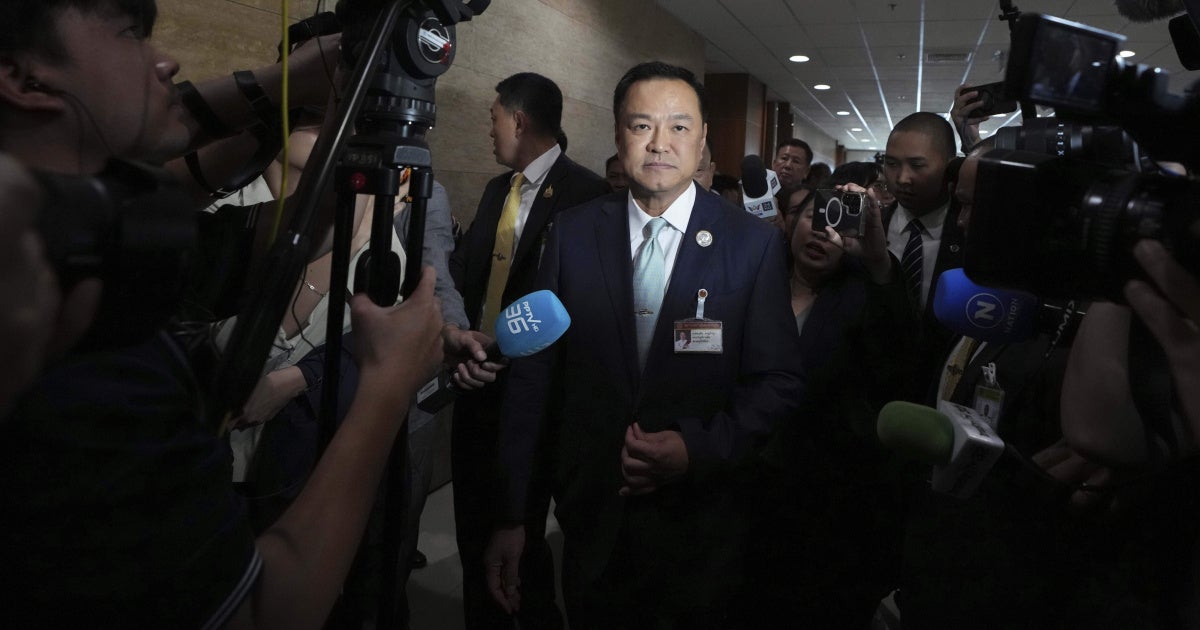
Click to expand Image Thai Prime Minister Anutin Charnvirakul after a press conference at Parliament in Bangkok, September 3, 2025. © 2025 Sakchai Lalit/AP Photo (Bangkok) The new Thai government should reverse the trend of past administrations and take concrete action to uphold human rights, Human Rights Watch said in a letter to Prime Minister Anutin Charnvirakul on November 12, 2025. Anutin took office on September 7 following a parliamentary election and royal endorsement.“The Anutin government should make human rights a priority and demonstrate a commitment through swift and effective action,” said Elaine Pearson, Asia director at Human Rights Watch. “The government should revoke abusive laws, end the repression of fundamental rights, and exonerate all those prosecuted for peacefully expressing their views.”Since the 2014 military coup, Thai authorities have imposed tight restrictions on viewpoints critical of the government and dissident opinions. They have prosecuted nearly 2, 000 people for exercising their rights to freedom of expression and peaceful public assembly. At least 284 people have been prosecuted on draconian lese majeste (insulting the monarchy) charges. The authorities have often held critics of the monarchy in pretrial detention for months without access to bail. The Thai government should reform the lese majeste law, adopt a moratorium on prosecution and pretrial detention under the current law, and ensure that any amnesty bill adopted by parliament includes amnesty for critics of the monarchy, Human Rights Watch said. The government should also immediately dismiss all pending Covid-19 restriction-related charges. The nationwide enforcement of emergency measures to control the spread of Covid-19 was lifted in October 2022, but at least 1, 469 people are still being prosecuted under the charges related to those measures. The killing and enforced disappearance of human rights defenders and other civil society activists remains a serious blot on Thailand’s human rights record. Cover-ups have effectively blocked efforts to pursue justice, even in high-profile cases, such as the ethnic Lahu activist Chaiyaphum Pa-sae, the ethnic Karen activist Porlajee Rakchongchareon, and the Muslim lawyer Somchai Neelapaijit. The authorities have failed to protect rights defenders from reprisals by government agencies and private companies using strategic lawsuits against public participation (known as SLAPPs). The Thai government should immediately curb the abuse of the judicial system to harass and punish critics and whistleblowers. In November, United Nations human rights experts expressed concerns about reports of death threats and online attacks against Senator Angkhana Neelapaijit, a former national human rights commissioner, and Human Rights Watch adviser Sunai Phasuk as a result of their comments regarding possible international humanitarian law violations in the recent Thailand-Cambodia border conflict. Prime Minister Anutin should enforce measures to end torture and enforced disappearance in line with the law on the Prevention and Suppression of Torture and Enforced Disappearance. Numerous allegations of police and military torture and other ill-treatment have gone unpunished. None of the outstanding cases of enforced disappearance have been resolved, including cases of nine exiled Thai dissidents who were abducted in neighboring countries during the previous government of Gen. Prayut Chan-ocha. The UN Working Group on Enforced or Involuntary Disappearances has raised concerns about enforced disappearances in the context of transfers of dissidents between Thailand and neighboring countries. Thai authorities in recent years have violated the international prohibition against refoulement, that is returning refugees and asylum seekers to countries where they are likely to face persecution, torture or other serious ill-treatment, or a threat to life. Thai authorities have forcibly returned asylum seekers and refugees from Bahrain, Cambodia, China, Laos, Malaysia, Myanmar, Turkey, Vietnam, and other countries. This inhumane practice undermines Thailand’s reputation as a safe haven for people fleeing war and persecution. In February, the government of then-Prime Minister Paetongtarn Shinawatra sent 40 Uyghur men to China, where they could face torture, arbitrary detention, and long-term imprisonment. After the murder of a former Cambodian opposition parliament member, Lim Kinya, in Bangkok in January, many critics of the Cambodian government living in Thailand have expressed concern for their safety. The Thai government should be commended for a new policy that went into effect on October 1 allowing Myanmar refugees in camps along the Thai-Myanmar border to work legally. The Thai government should introduce a protection framework for more recent arrivals from Myanmar, whether they are in border areas or elsewhere in Thailand.“Prime Minister Anutin has a chance to chart a new path for Thailand by ending ongoing human rights abuses,” Pearson said. “The new Thai government should quickly adopt a clear plan to address human rights issues and implement it.”.
OpenAI’s ChatGPT was found to have reproduced lyrics of several musicians, violating German copyright law.
According to an FIR registered at the Worli police station, Advocate Shabnam Mohammad Hussain Syed discovered a series of fake articles and videos in June 2025 that falsely associated Neha Kakkar with an investment outfit called FXOnet. The scammers portrayed the platform as “trusted and legal,” using Kakkar’s image to lend credibility. Syed, a resident of BDD Chawl in Worli, was lured by these fraudulent promotions and engaged with the alleged perpetrators, who went by the names Vijay and later Jimmy D’Souza. Communication was maintained through international numbers, the Telegram messaging app (user ID: @fxonetlbot), and Zoom meetings, giving the operation a veneer of authenticity. The accused provided investment “tips” and guided Syed through opening an FXOnet trading account. Between June 18 and October 9, 2025, Syed transferred Rs 5, 02, 025 through UPI to various bank accounts linked to entities, including Rajesh Kannan, VPI ProMedia Kigali, India Impex Trading Company, and VPI 361 VPECOM. When Syed failed to receive any promised returns or refunds, she realised she had been deceived and filed a police complaint. Mumbai Police have booked the accused under the provisions of the Bharatiya Nyay Sanhita (BNS) and the Information Technology Act (IT Act). Investigators are collecting digital evidence, including Telegram chats, Zoom call details, and transaction records, to trace the culprits. This is not the first time fraudsters have exploited celebrity identities in financial scams. Earlier, Mumbai Police registered another complaint involving a scammer impersonating Hollywood star Keanu Reeves to cheat a 69-year-old woman out of Rs 65, 000. Also Read: Neha Kakkar responds to Melbourne organisers’ claim that she “refused” to perform for 700 people, shares concert video.
Julie Chrisly was said to be ‘heartbroken’ over claims she ‘put her hands’ on her step-daughter, Lindsie, an insider revealed.
ウナギ規制「全種対象へ」 ワシントン条約、最終評価