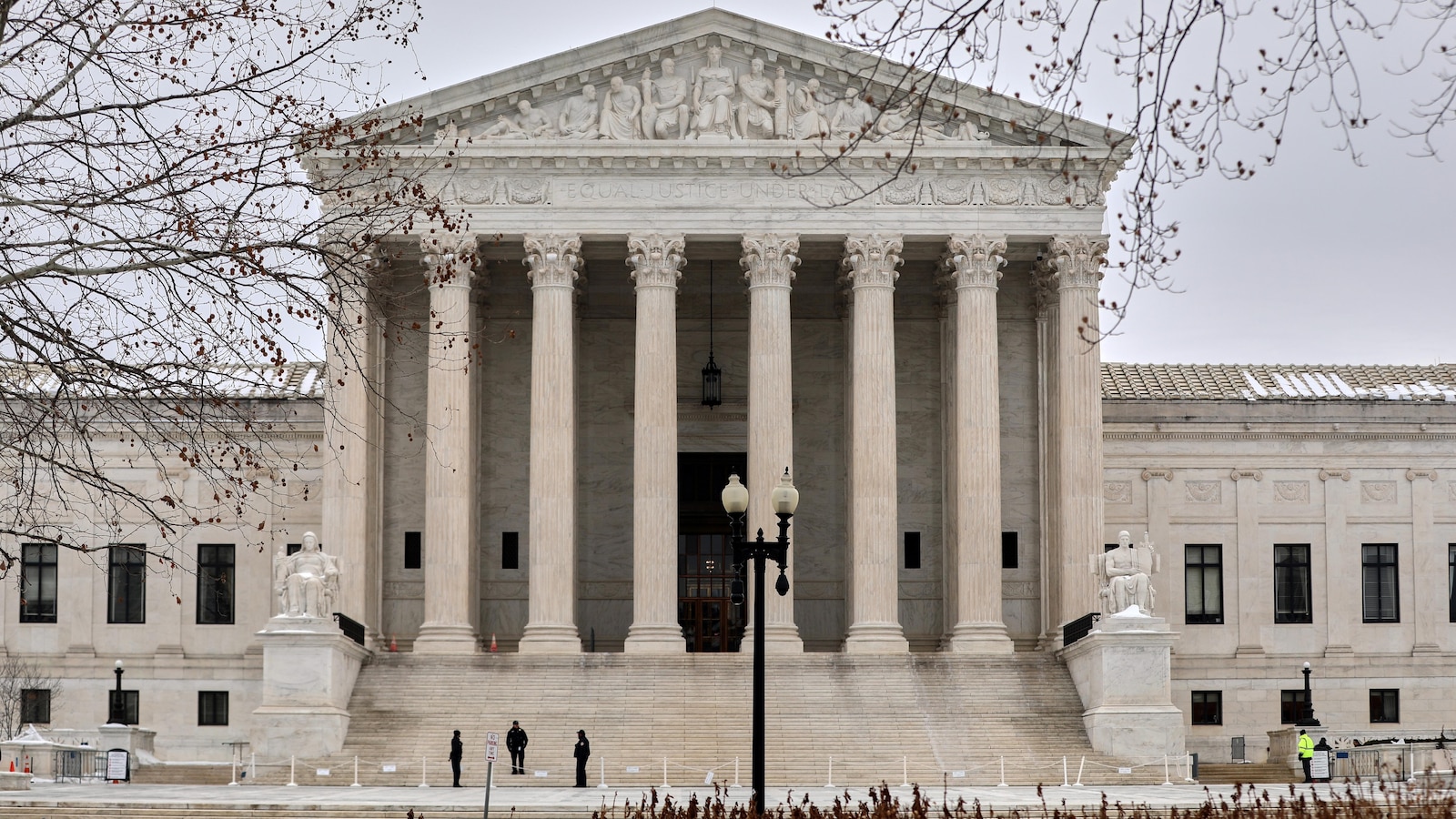
WASHINGTON — Sharing a stage, Supreme Court Justices Ketanji Brown Jackson and Brett Kavanaugh sparred Monday over the many emergency orders the court has issued allowing President Donald Trump to move ahead with key parts of his agenda.
The setting was extraordinary: a federal courtroom filled with legal luminaries, including the federal judge singled out by Trump after blocking part of the president’s immigration crackdown. Kavanaugh, 61, and Jackson, 55, sat a few feet apart in a courtroom where they both heard cases when they served on the federal appeals court in Washington. They were separated only by a federal judge who asked questions of them both.
The occasion was an annual lecture in memory of former federal judge and prosecutor Thomas A. Flannery. Trump appointed Kavanaugh to the high court in 2018, while Jackson moved up from the appeals court in 2022, appointed by President Joe Biden.
The issue in emergency appeals is whether a policy challenged in court should be allowed to take effect while a legal case—sometimes lasting for years—continues.
Jackson, a frequent dissenter from the emergency orders, criticized Kavanaugh and other conservatives who repeatedly sided with Trump last year, saying they were not serving the court or the country well.
“The administration is making new policy… and then insisting the new policy take effect immediately, before the challenge is decided. This uptick in the court’s willingness to get involved in cases on the emergency docket is a real unfortunate problem,” Jackson said to loud applause.
She added that the court is “creating a kind of warped” legal process by intervening at an early stage of a case and essentially predicting the outcome before arguments are fully developed.
Kavanaugh responded by noting that the Justice Department’s rush to the Supreme Court is not unique to the Trump administration.
As enacting legislation through Congress becomes more difficult, “administrations push the envelope in regulations. Some are lawful, some are not,” he explained.
He also pointed out that some critics of the recent orders had no objection when justices allowed challenged Biden administration policies to take effect while court cases were still proceeding.
Many of the judges in attendance have been involved in high-profile challenges to administration policies, including U.S. District Judge James Boasberg. His clash with the administration over deportation flights to a notorious prison in El Salvador prompted Trump to call for Boasberg’s impeachment.
Also present was U.S. District Judge Royce Lamberth, who ruled two days ago that Kari Lake, Trump’s choice to lead the U.S. Agency for Global Media, did not have legal authority to take actions that largely dismantled the Voice of America.
Neither Jackson nor Kavanaugh mentioned judges by name during the discussion. However, Jackson repeated a complaint frequently made by her and other liberal justices in their dissents.
“Should the Supreme Court be superintending the lower courts when they are hearing and deciding the issues?” she asked.
Kavanaugh, who joined an opinion criticizing lower-court judges for ignoring Supreme Court rulings, acknowledged the complexity of the issues for the justices.
“None of us enjoys this,” he said, referring to the challenges faced in these contentious cases.
https://abcnews.com/US/wireStory/sharing-stage-justices-jackson-kavanaugh-spar-supreme-court-130918202